Balcony Pots as Shelter: Arrange Leaves, Gaps, and a Clear View
A balcony planting can offer birds useful cover without turning the space into a thicket. Arrange pots by height, choose plants for varied structure, and keep clear sightlines to the places birds might approach.
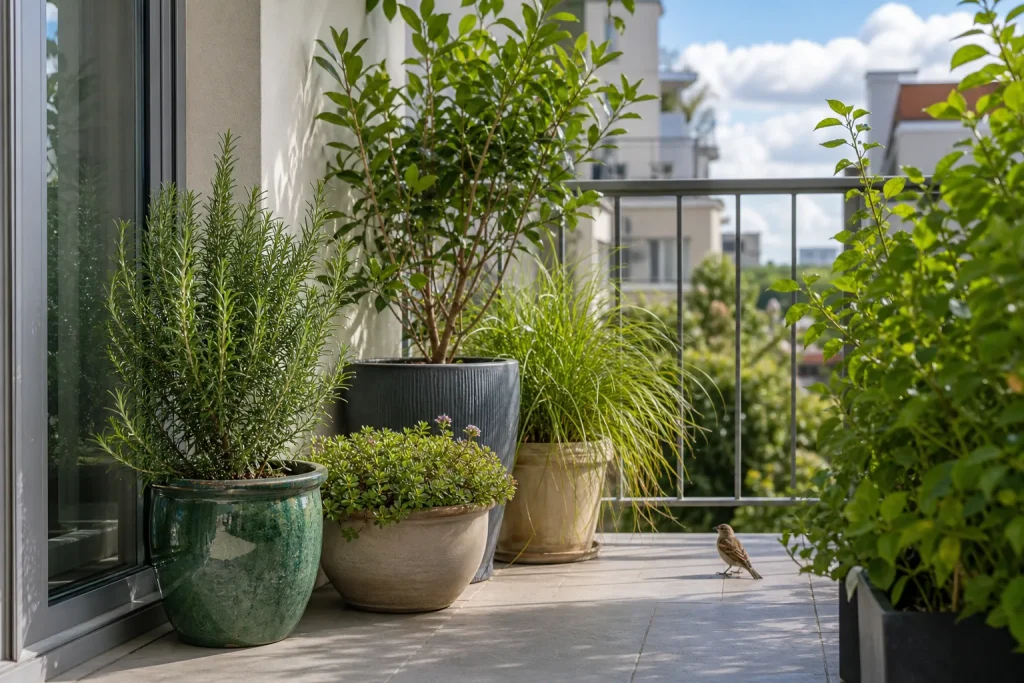
A balcony feels more sheltered to a small bird when leaves break up open space but do not hide every route in or out. A row of identical pots against the rail may add greenery, yet a more useful arrangement gives plants different heights, leaves some open gaps and preserves a clear view from the balcony door. The aim is not to attract every bird or imitate a wild hedge. It is to make a small, predictable space less exposed, while keeping it manageable for you.
Balcony conditions vary sharply. A high, windy corner is unlike a sheltered ground-floor ledge; a north-facing wall differs from a hot, bright rail. Birds also differ in how they use cover. Treat the arrangement as a set of choices to adjust, not a universal recipe.
Start with the balcony birds can actually reach
Before choosing plants, observe how birds move around the building. From indoors, watch the nearest trees, roof edges, fences and neighbouring balconies. Notice whether birds approach from above, along a wall or from a nearby branch. You do not need to identify every visitor. The practical question is where a bird could arrive from and what exposed space it would have to cross.
Then consider the balcony itself. Check which areas get strong sun, where wind funnels between buildings, and whether rain reaches the pots. A heavy planter that is stable on a sheltered floor may be unsuitable on an exposed ledge. Keep containers securely positioned, follow building rules, and do not place anything where it could fall. If you are unsure about the balcony’s load limits or fixing points, ask the building manager or a qualified professional before adding substantial weight.
Also account for daily use. A narrow path to the door, a clothes-drying rack or a table can matter more than squeezing in another plant. Birds are less likely to use a space that is repeatedly disturbed at close range. Keep the route you use most often open, and place cover where it does not force you to brush past it.
Use height to make a layered edge
Container height shapes both shelter and visibility. Low pots can soften an exposed floor or the base of a wall. Medium plants can interrupt a long, bare line of railing. A taller plant may create a leafy backdrop, but it should not become an opaque screen across the whole balcony.
Arrange containers in a loose progression rather than a solid wall: a lower pot near a corner, a medium plant beside it, and a taller container set back from the rail or wall. This creates changes in height while preserving open areas. A plant set slightly behind another can provide a sheltered-looking pocket without sealing it off.
Choose the sequence around your actual view. From a chair or the main window, you should still be able to see the balcony floor and the open edge between pots. That makes it easier to notice a bird approaching and helps you spot problems such as a pot tipping, dry soil or a tangled stem. If tall foliage blocks the view entirely, move it to a side corner or choose a more open-growing plant.
Say you have a narrow balcony with one sunny end and a shaded wall. You could place a sturdy, medium-height herb in a stable floor pot near the wall, add a lower pot beside it, and leave the rail-facing corner open. The expected result is a small patch of varied foliage with a visible approach route, rather than a continuous screen. If the herb struggles in the shade or the arrangement obstructs the door, move it or choose a plant better suited to those conditions.
Choose structure, not just flowers
Leaves and stems determine whether a plant offers a dense block, a loose screen or a few upright lines. A mix of forms is often more flexible than several plants with the same shape. Look for a combination of leafy branches, fine stems and open space between growth. The right balance depends on the balcony and the birds nearby; no container planting suits every species.
Evergreen foliage can provide cover through seasons when other plants lose their leaves, while deciduous plants change their structure over the year. Grasses may give a light, moving screen; herbs such as rosemary can form a woody shape where conditions suit them. A small shrub can add depth, but check its mature size before buying it. The label should explain its light and watering needs, and a local garden centre can help match a plant to a windy, shaded or sunny balcony.
Do not treat flowers as the only measure of wildlife value. A plant’s growth habit may matter more for shelter than its blooms. If you choose flowering plants, favour species that suit your local climate and avoid treating one attractive pot as a complete habitat. Soil depth, exposure and watering all limit what can thrive in a container.
Keep the planting varied without making it congested. A bird should have nearby foliage to retreat towards, but dense stems can also trap litter, hide hazards and make watering difficult. Leave enough space to inspect the soil and prune dead or damaged growth. Remove loose plastic ties and any netting that could catch a foot or wing.
Keep gaps that work as routes
Openings are part of the arrangement, not wasted space. A gap beside a pot can leave a clear landing or departure route. A break in foliage can let birds see beyond the balcony instead of entering a blind corner. You do not need to create a precise corridor; simply avoid closing every approach with a solid line of containers.
Think in terms of a sheltered edge and an open view. Put the fullest foliage near a wall or side corner, then leave at least one visibly open section towards the balcony’s outer edge. Avoid making a narrow pocket behind a large pot where a bird could feel boxed in. Also keep the floor clear of clutter that could make a quick departure difficult.
Watch the arrangement from indoors and from the balcony doorway. If you cannot see the floor behind a plant, a bird may be harder to observe and a hidden corner may be awkward to maintain. If the rail is obscured from every angle, thin the foliage or shift a container. Clear sightlines are useful for you as well as for noticing whether birds are using the space calmly or avoiding it.
Make the planting safe and manageable
Use pots with drainage holes and saucers that do not leave standing water for long periods. Water according to the plant and weather rather than on a fixed schedule. Container soil dries differently in wind and sun, so check it with a finger before watering. Keep fertiliser and plant treatments away from birds, and follow product instructions carefully; if a pest problem needs treatment, choose a method suitable for a space used by wildlife.
Secure tall stems and containers against gusts. Do not attach loose strings or fine mesh where birds can become entangled. Keep pruning tools, potting compost and cleaning supplies stored safely, and clean up fallen leaves when they become slippery or block drainage. If a plant is toxic to pets or people in your household, account for that before placing it within reach.
Balcony shelter should not depend on food or water being left out. Those additions can create maintenance and hygiene issues, and local rules may restrict them. If you are considering a feeder or water dish, check local guidance and keep any provision clean. The planting itself can still offer structure without encouraging birds to gather in a crowded spot.
Adjust by watching the space
Give the arrangement time, then make small changes based on what you can see. Notice whether birds pause near the plants, pass by without approaching, or avoid a particular corner. Also watch for practical signs: leaves battered by wind, soil that dries too quickly, or a plant that blocks your usual route. These observations are not proof that one layout works for all birds; they help you decide whether this balcony’s arrangement is sensible.
Change one feature at a time. Move a pot a little farther from the rail, open a gap between two plants or trim a branch that has grown across the view. That makes the effect of each adjustment easier to notice. If birds seem unsettled by activity near the door, keep the planting in place but reduce how often you approach it, rather than moving everything at once.
Think of the balcony as a small edge habitat: a few layers, more than one kind of plant structure, and a visible way through. The most useful arrangement is the one that suits the building, the plants and the birds that already pass nearby. Keep it stable, leave room to see and move, and let seasonal growth guide the next adjustment.