Glass at Bird Height: Rethinking Reflections Around the Home
A bright pane can look like open sky or a route to leafy shelter. Learn how to spot risky reflections and make home windows easier for birds to see.
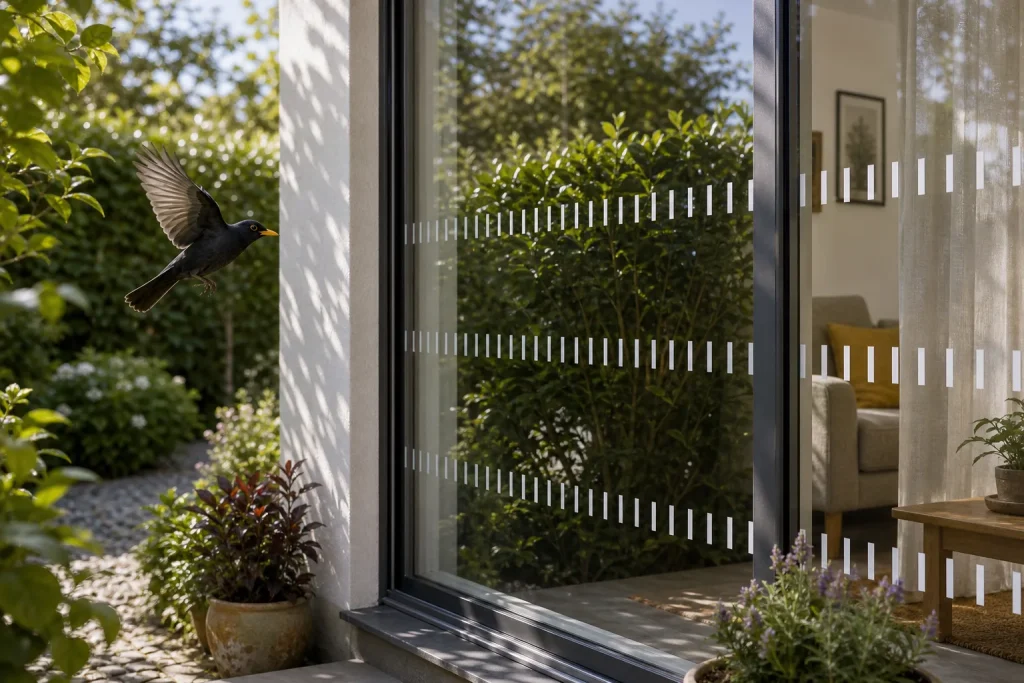
A patio door reflecting a hedge can look like an open flight route to a bird approaching from the garden. Make that glass easier to see by checking it from outdoors, then placing visible cues on the outside surface where the reflection creates a false passage.
Inspect the glass from likely approach routes
Stand outdoors where birds usually arrive, such as beside a hedge, fence or garden path, and look towards the pane. Check it in different light: a reflection that is faint under cloud may become strong in sunshine. Look for reflected branches or sky, and for a view straight through the home to another bright window.
Repeat the check from the side, not just directly in front. A corner pane or glazed porch may reflect a different part of the garden from each angle. Note the specific area that appears open; that is where a treatment needs to interrupt the illusion.
For a simple record, mark the problem area on a rough sketch of the window and note the approach direction. If you see a clear reflection from the hedge side but not from the path, prioritise that view rather than treating every pane alike.
Put visible cues on the outside face
Use a product intended for the exterior of windows, such as a suitable patterned film, exterior decals arranged in a close pattern, or bird-deterrent cords fitted according to the maker’s instructions. A single sticker can leave most of a broad pane appearing clear. Cover the area that looks like a route, and assess the spacing from outdoors so the marks form a visible interruption rather than isolated decorations.
Check the marks against both the reflection and the view through the glass. If pale marks disappear against bright sky, choose a more visible colour or pattern. If dark marks vanish against reflected foliage, change the contrast or coverage. Follow product instructions for spacing and fitting; if the markings leave broad clear gaps, add coverage or select a different treatment.
A securely fitted exterior screen can also break up a reflection. Use a screen designed for the window and keep it taut as directed. If it loosens, sags or leaves an exposed section where the false route remains, refit it or choose another suitable option.
Use indoor changes for views through rooms
Curtains and blinds can interrupt a bird’s view through one window to another. From outdoors, check whether the far window still looks like a bright opening. If it does, close a blind, draw a curtain or adjust slats to break the line of sight, then check again.
Indoor coverings do not remove an exterior reflection. If the pane still mirrors a hedge or sky after you draw the curtains, use a visible exterior treatment as well. At night, draw curtains or blinds where practical and switch off unnecessary lights close to large panes. This reduces bright indoor views and helps people notice the glass when moving through a dark room.
Assess the surroundings without relying on feeder placement
Focus first on making the pane readable rather than shifting a feeder as a general remedy. Feeder position and bird flight routes depend on the particular garden, so avoid assuming that moving it nearer to or farther from the glass will solve a reflection problem. If you are considering a change, observe where birds approach and leave, and seek current advice from a specialist bird-conservation organisation before relying on placement as a collision-prevention measure.
Look for other reflections that create an apparent destination, such as a potted plant mirrored in the pane. If a planter’s reflection appears to continue a flight route, try moving the pot to one side and inspect the view again from outdoors. Keep useful shelter where possible; the aim is to change the misleading view, not to remove habitat without a clear reason.
Respond promptly to signs of a collision
Feathers, smudges or repeated impacts near one pane are reasons to act, even if no injured bird is visible. Check nearby shrubs and sheltered spots, where a bird may have landed. If you find an injured bird, contact a local wildlife rehabilitator or appropriate animal welfare service for advice. Handle it only if necessary to protect it from immediate danger, and follow professional guidance.
After a suspected strike, cover the affected area with a suitable exterior treatment while you decide on a lasting option. Check the result from the direction the bird approached. If the glass still appears to offer a clear route, extend the coverage or select another product suited to the pane.
Imagine you see a blackbird fly from a hedge towards a patio door that reflects the same hedge. You note the approach on a sketch, apply exterior tape intended for glass across the reflected area, and return to the hedge-side viewpoint. If the tape leaves a clear-looking gap in the apparent route, you add marks there; if the whole area now reads as a barrier, you keep the temporary treatment in place while choosing a durable product. The observable decision is whether the reflection still looks open from that approach, not whether one change can prevent every collision.
Use a simple check before and after each change
- Check the reflection from the hedge side. If branches appear to continue through the pane, treat that area; if they do not, inspect the next likely approach before choosing a treatment.
- Check for a view through two aligned windows. If the room appears to offer an open passage, adjust a curtain or blind; if the view remains clear, try another indoor arrangement or add an exterior cue.
- Check whether exterior marks stand out against the reflected sky. If they disappear, change their contrast or coverage; if they remain visible, check them against darker reflected foliage too.
- Check for broad gaps between marks. If clear areas still read as an opening, add coverage or choose a denser product; if the pattern breaks up the route, inspect it from another angle.
- Check screens for loose or sagging sections. If the screen is not taut or leaves the problem area exposed, refit it according to the maker’s directions or replace it; if it is secure, check the reflection through the screen.
- Check nearby shrubs and the ground after a suspected strike. If you find an injured bird, contact a local wildlife rehabilitator or animal welfare service; if no bird is visible, still address the pane rather than assuming the risk has passed.
- Check the treatment after cleaning or a change in foliage. If marks have peeled or the reflection has shifted, restore coverage or reassess the pane; if the cues remain visible, keep checking from the usual approach routes.
Choose treatments that suit the household
Start with the pane that has the clearest false route or signs of impact. In a rented home, ask the landlord before applying permanent film or drilling for a screen. Choose removable products only if their instructions say they are suitable for the glass and outdoor conditions.
Keep large glazed doors noticeable to people as well as birds. Use markings people can see when carrying items through, and take care when opening windows or doors fitted with screens. Recheck the pane after cleaning, changes in planting or seasonal shifts in reflected foliage. If you are unsure which treatment suits a particular building or window, ask a bird-conservation organisation or a qualified glazing professional for advice.