The Empty Feeder Season: What a Pause Can Mean
A quiet feeder does not always signal a problem. Check the season, food, weather and nearby alternatives before changing your setup.
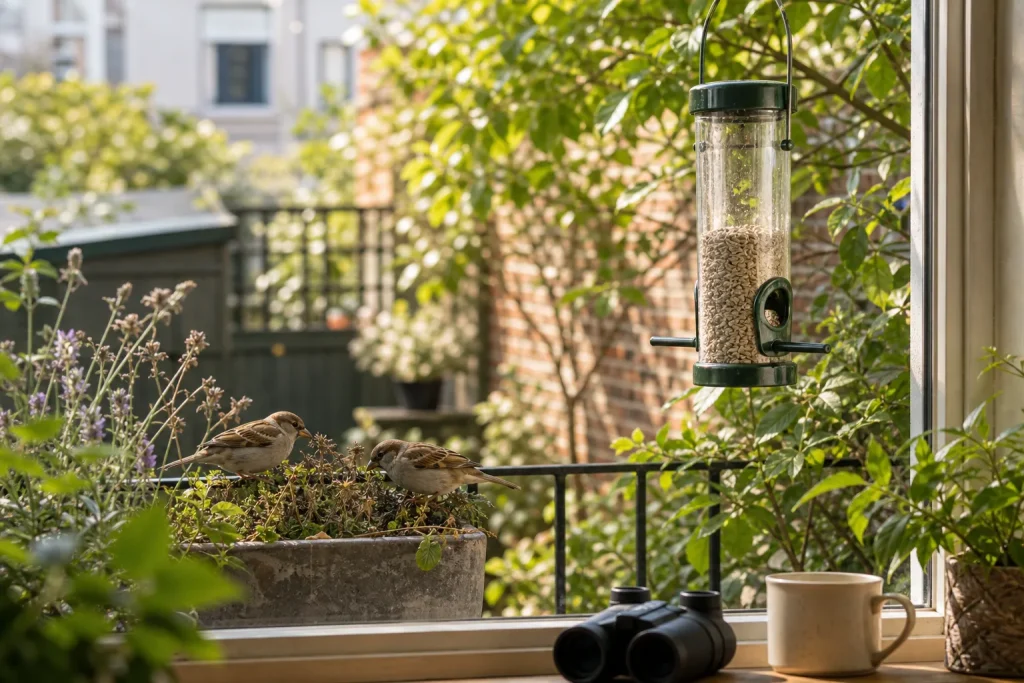
An empty feeder can stay untouched while birds feed nearby. Before moving it or changing the food, check the season, weather, feeder condition and other food sources. A pause is often a reason to observe first, not a signal to intervene.
Start by checking the season
Birds’ routines change through the year. In spring and summer, some species spend more time finding insects, fruit or other natural food. Nesting birds may visit a particular area often, then stop once their young have fledged or moved on. Migrants can appear briefly in autumn and continue on their way, while winter visitors may arrive when local food becomes less available.
These shifts do not follow a neat schedule in every garden. A cold spell, a mild stretch or ripe berries can alter what birds choose. Note what is happening outside the feeder, too. Are trees carrying fruit? Are seed heads still standing in a nearby verge? Has leaf cover changed the feel of the garden?
For a few days, watch at different times rather than waiting beside the feeder. You may see birds using a hedge, picking insects from leaves or taking fallen seed from the ground. If they are present elsewhere, the feeder may simply be less useful just now.
Look for food and shelter nearby
A feeder is one food source among many. In an urban garden, birds may use street trees, courtyard shrubs, window boxes, allotments or uncut plants. A neighbour’s feeders can also draw visitors away. Insects among leaves, berries behind a fence and seeds left on plants may all compete with what you offer.
Check whether the feeder’s surroundings have changed. Has pruning removed a perch birds used before approaching? Has building work, a newly active cat or more foot traffic made the spot feel exposed? Birds may favour nearby cover, but they also need a clear way to approach and leave.
Say you have a small feeder beside a recently trimmed courtyard hedge, and you see sparrows feeding on seed heads in a neighbouring planter. You leave the feeder where it is and watch from indoors at several points during the day. If the sparrows keep using the planter and the feeder remains quiet, the observable result is that nearby food is available; you can leave the feeder undisturbed rather than adding more.
Check the feeder before changing its position
Inspect the food and feeder closely. Damp, clumped or stale food may be unappealing, and a blocked port can make it hard to reach. Look for droppings, mould, husks packed into corners or residue around the opening. If the feeder needs cleaning, follow its care instructions, use a suitable brush and wash it with soapy water, then rinse and let it dry fully before refilling with fresh food. If you cannot clean it properly, do not refill it until you can.
Consider whether the food suits the birds you see. Some birds favour seeds they can crack; others may take smaller seed or use a different feeder style. If you decide to change food, replace only that food and keep the feeder in place. Watch for visits and uneaten food before deciding whether to continue or switch back. Changing several things together makes it harder to see what birds are using.
Use portions small enough to stay fresh. If food remains for a long time, offer less at the next refill rather than adding more. Remove wet or spoiled food instead of topping it up.
Notice the weather and the feeder’s exposure
Wind can make a hanging feeder swing, while driving rain may soak food or leave the perch uncomfortable. Strong sun can make an exposed site less inviting at certain times. Watch the feeder during the conditions birds encounter, not only when you happen to check it. A spot that seems calm from indoors may be buffeted by wind at the birds’ approach height.
If the location appears exposed, try one modest adjustment, such as moving the feeder nearer suitable cover while keeping a clear flight path. Check that cats cannot reach it from a wall, fence or branch. If the feeder is already clean, dry and sheltered, leave it in place for a while; repeated changes make it harder to tell whether visits are shifting with the season.
Respond cautiously to possible illness
If you see sick or dead birds, do not assume that cleaning a feeder is enough. Pause feeding and avoid handling birds or carcasses. Keep pets and children away, and contact the relevant local wildlife or animal-health authority for current instructions. Follow its guidance on whether and how to clean or disinfect feeders and nearby surfaces, and when feeding can resume. Advice can vary with the suspected illness and location, so do not rely on a generic cleaning routine. If you are unsure, ask a qualified wildlife professional or the appropriate local organisation.
Also consider whether the feeder is attracting rodents or creating a collision hazard near a window. Address the source of the problem rather than adding food or moving the feeder blindly. For a safety concern, use locally appropriate guidance.
Use a short check before making a change
- Nearby activity: If birds are feeding on berries, seed heads or insects elsewhere, leave the feeder alone for now; if you see no activity nearby, continue checking the feeder and its surroundings.
- Food condition: If food is wet, mouldy or clumped, remove it and clean and dry the feeder; if it is dry and fresh, do not replace it merely because visits have paused.
- Access: If a port is blocked or seed is stuck, clear it while cleaning; if openings are clear, leave the feeder unchanged and look for another cause.
- Weather exposure: If wind swings the feeder or rain reaches the food, make one small move to a more sheltered position with a clear approach; if it stays steady and dry, do not relocate it for weather alone.
- Predator access: If a cat can reach the feeder from a nearby fence, wall or branch, adjust the position to reduce that access; if the route is clear, keep observing rather than moving it without cause.
- Possible illness: If birds appear sick or dead, pause feeding, keep people and pets away, and contact the relevant local authority for current directions; if there are no such signs, continue routine observation and hygiene.
Imagine a feeder has been quiet through a mild spell. The hypothetical starting conditions are dry sunflower hearts, a clear feeding port, a steady feeder and sparrows taking seed from a planter nearby. You check the feeder and see no mould or blockage, then watch from indoors at different times over the next few days without moving it or changing the food. If the sparrows continue at the planter and no birds show signs of illness, the resulting decision is to leave the setup as it is and avoid adding food. If the planter becomes empty and the feeder remains quiet, check the feeder’s exposure and access next, changing only one feature if you see a specific problem.
Make one change when there is a clear reason
If there is no immediate hygiene or safety concern, choose one adjustment and note what you changed: clean the feeder, replace spoiled food, or alter its position, but do not do all three at once. Watch what happens afterwards. If visits resume, keep the change; if nothing changes and the original setup was safe and clean, consider restoring it and continue watching for seasonal shifts.
A feeder’s quiet spell can be part of a living neighbourhood rather than a failure of your setup. Keep food clean, notice where birds feed instead, and let a clear observation guide your next decision. When natural food is abundant, leaving a clean, safe feeder undisturbed may be the most useful choice.